 Google
 Facebook
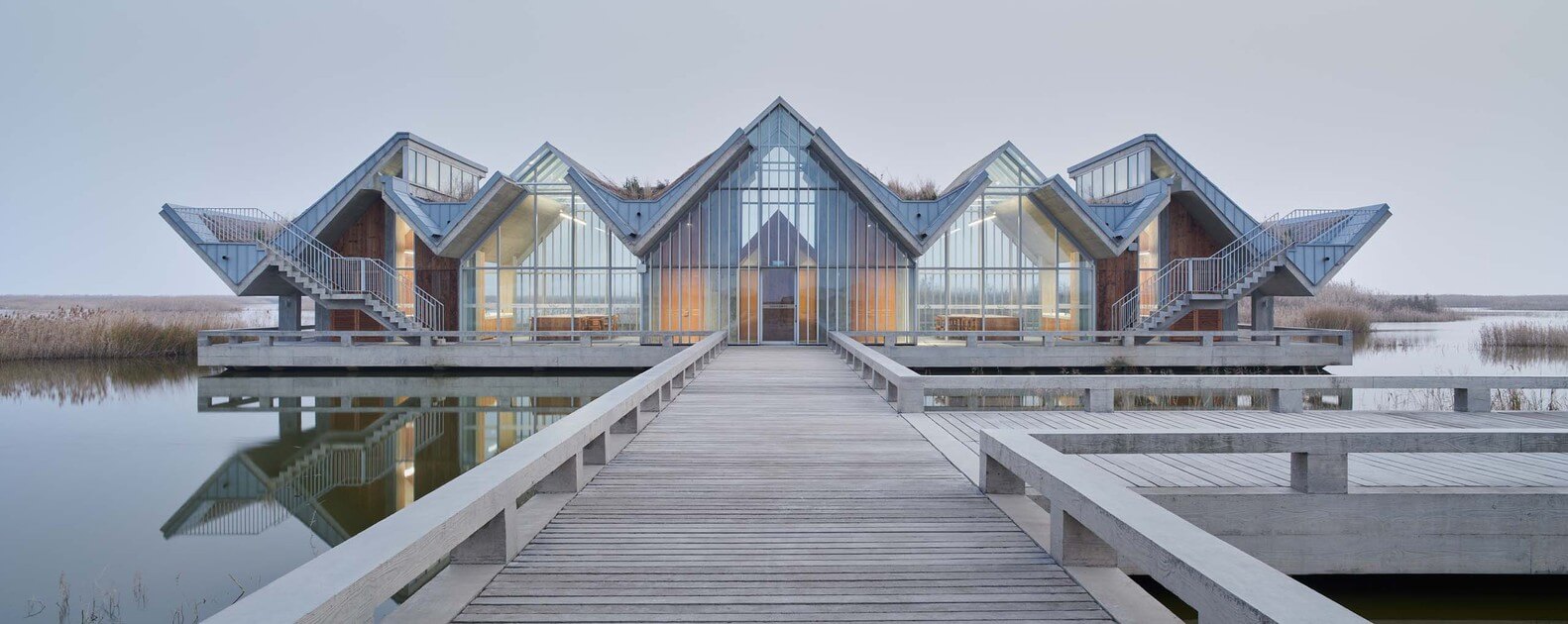
Wetland Research and Education Center | Atelier Z+







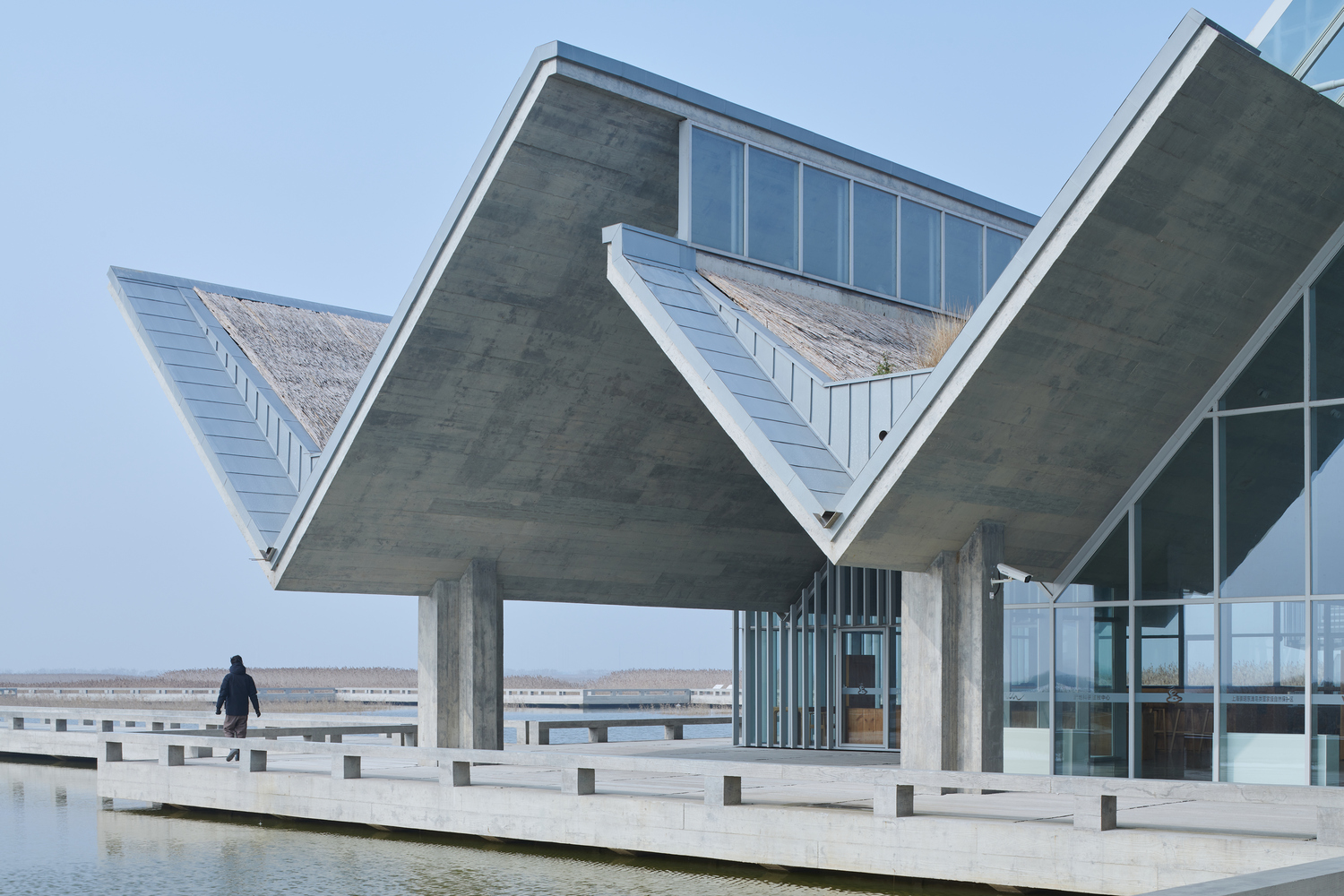


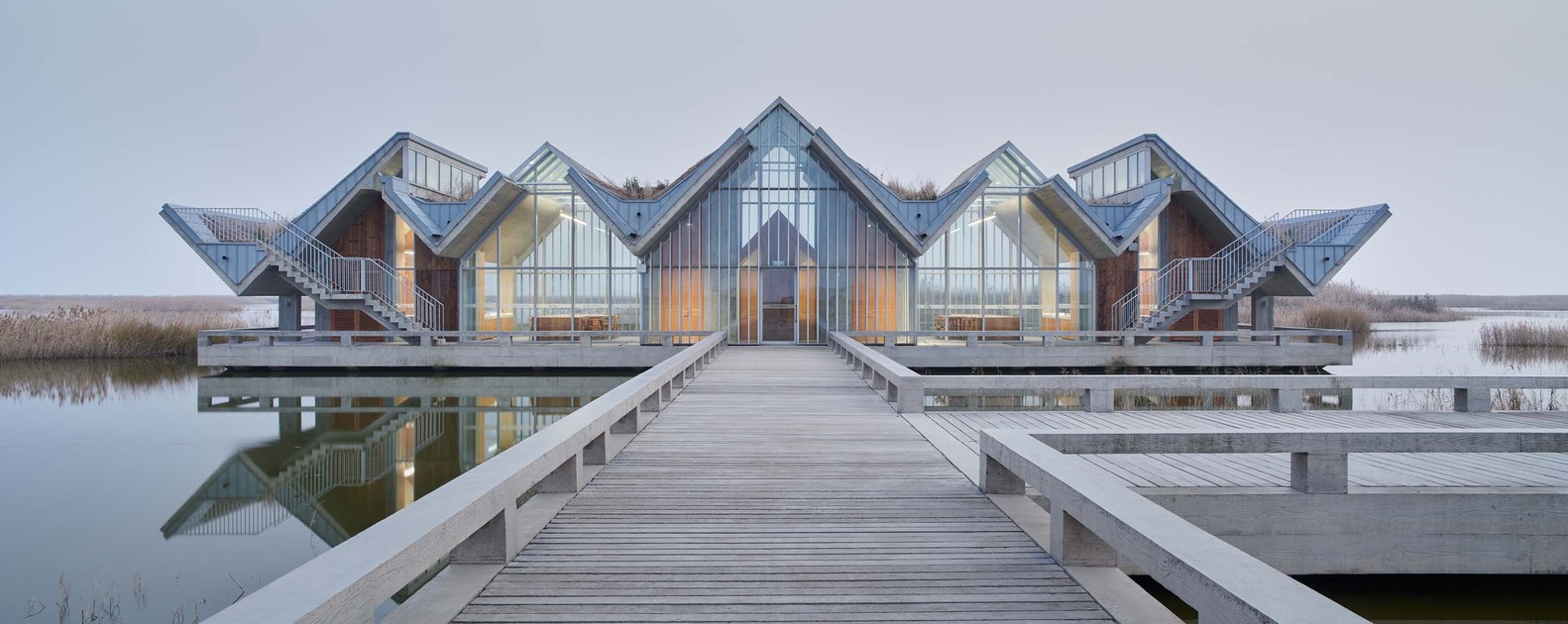
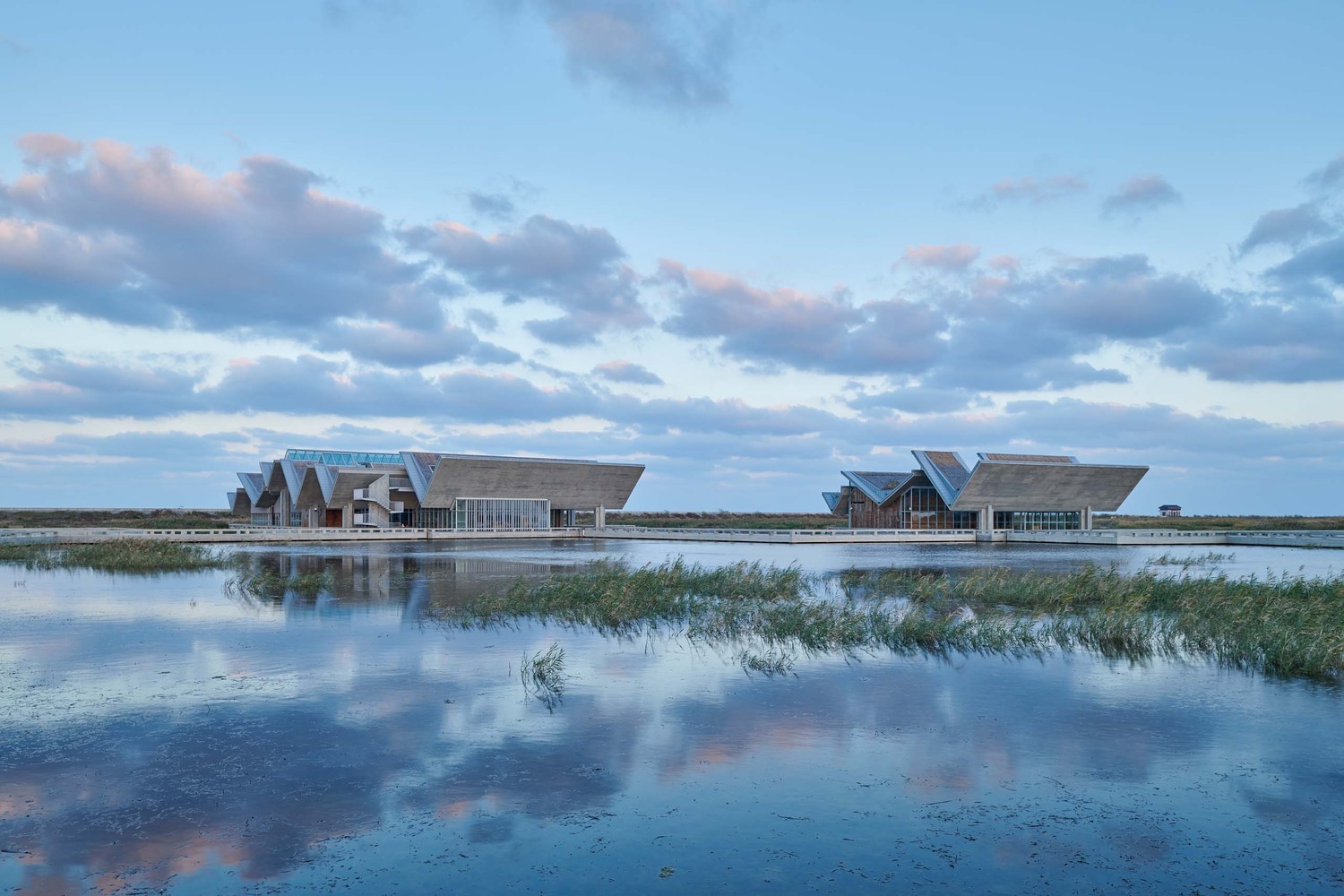
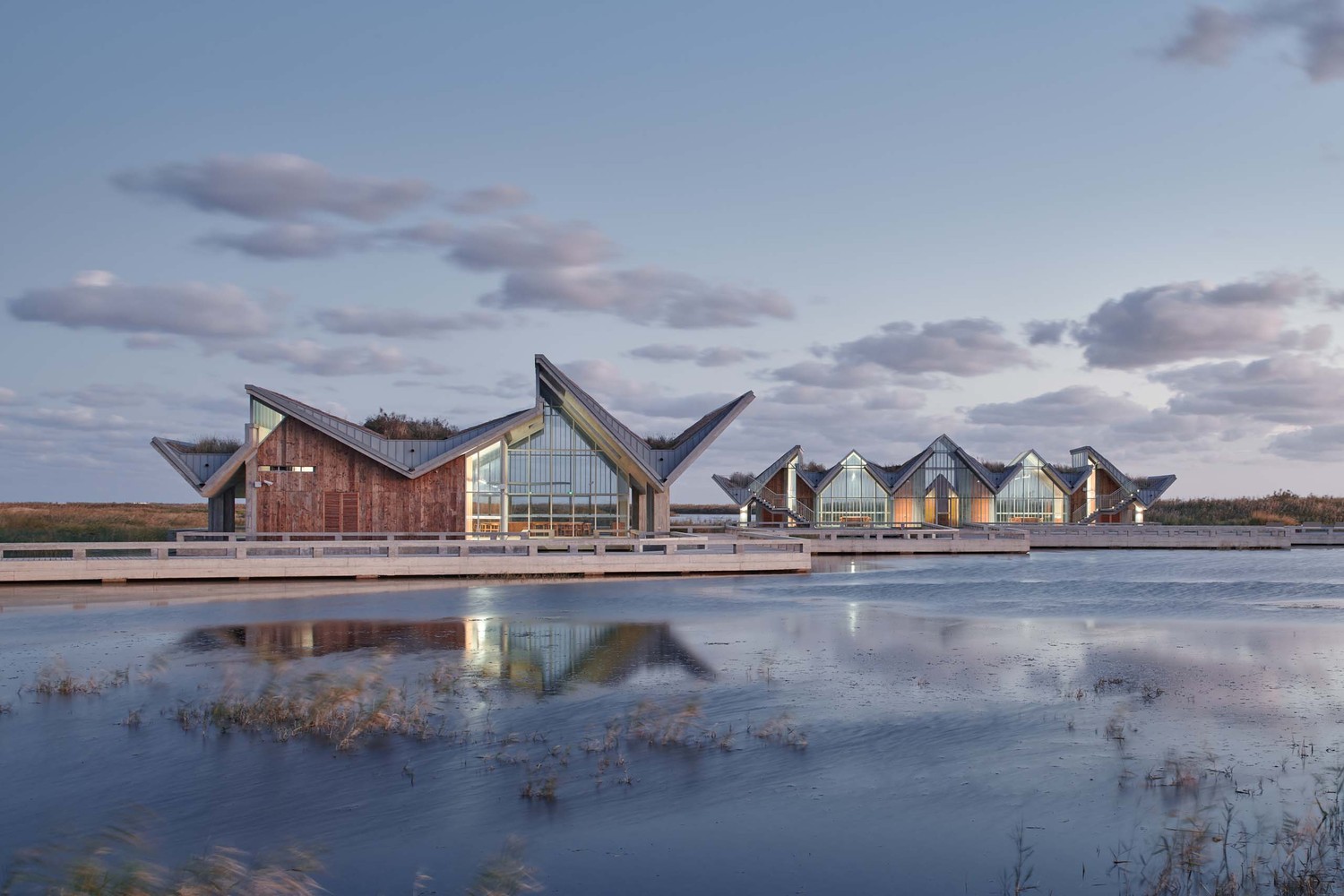
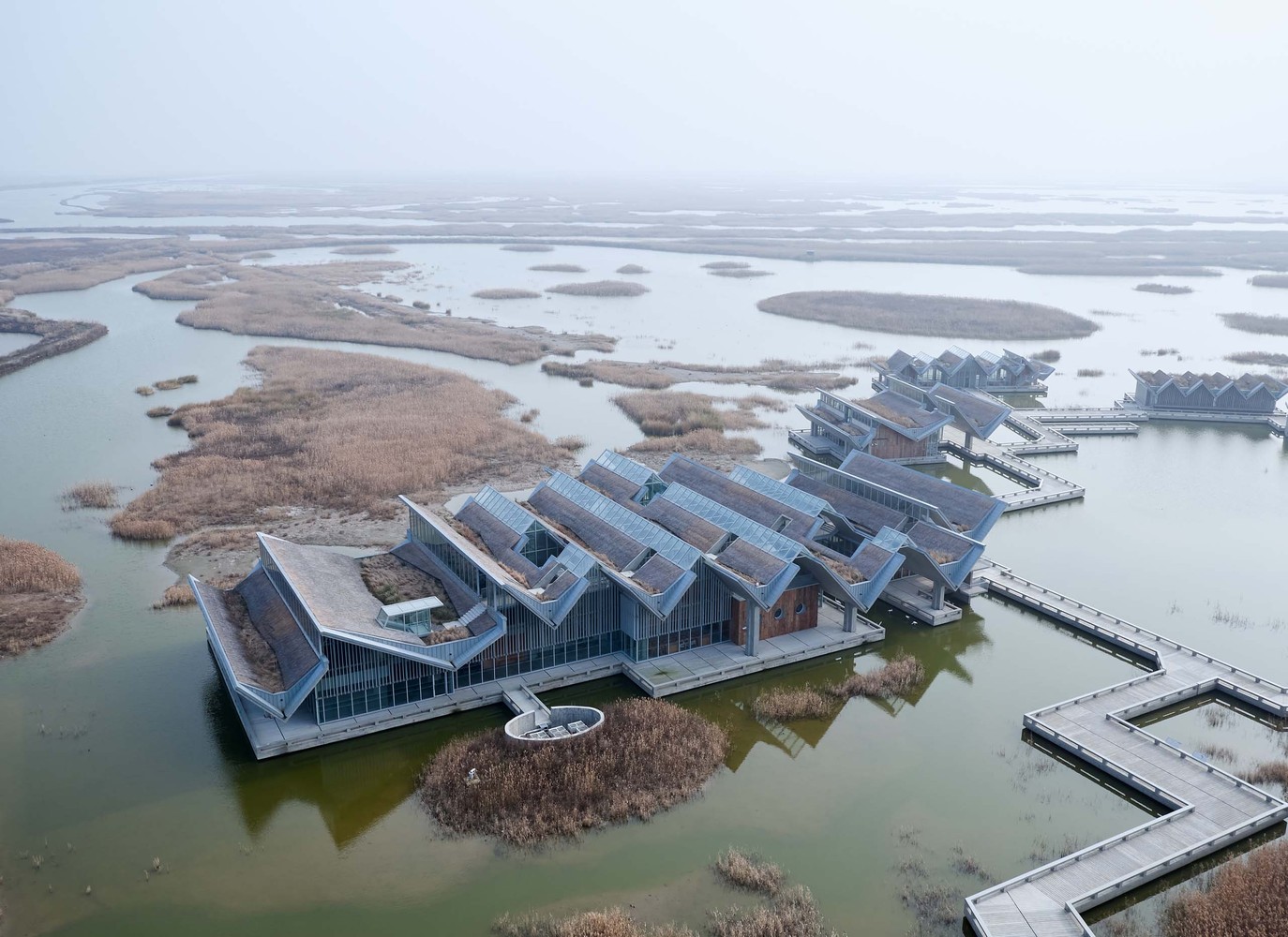
Dongtan Wetland is a sort of estuary tidal flat wetland which is located at the easternmost point of Chongming Island, at the mouth of the Yangtze River. This location is a kind of flat wetland that becomes the estuary of the tides. This wetland is in the middle of the East Asia-Australia route, which is one of the world's eight migratory routes for birds. Apart from serving as a very important corridor for waterfowl migration in the Asia Pacific Region, the Dongtan Wetland is also one of the most significant gathering places and natural habitats for wild birds.
In order to strengthen the tidal flats, in the 1990s, the invasive plant spatina alterniflora was introduced to strengthen the tidal flats, unfortunately this resulted in the destruction of the wetland ecology. To deal with this problem, the Shanghai Chongming Dongtan National Nature Reserve started an ecological control project on spartina alterniflora as well as an environment optimization of bird habitats in 2013 and completed in 2019.
To create a supporting facility of this project, the research and Education Center was built as an important platform of scientific research monitoring, bird appeals, law enforcement of management and protection, and education. It also serves for raising both awareness and display of ecological and environmental protection as well as promoting worldwide cooperation and exchange. The site is situated in a restored reed wetland in the northeast of the Nature Reserve, where the water and the sky merge in one colour, few people tread, flocks of birds perch. With modesty and respect, we suppose the building would be in harmony with the natural area.
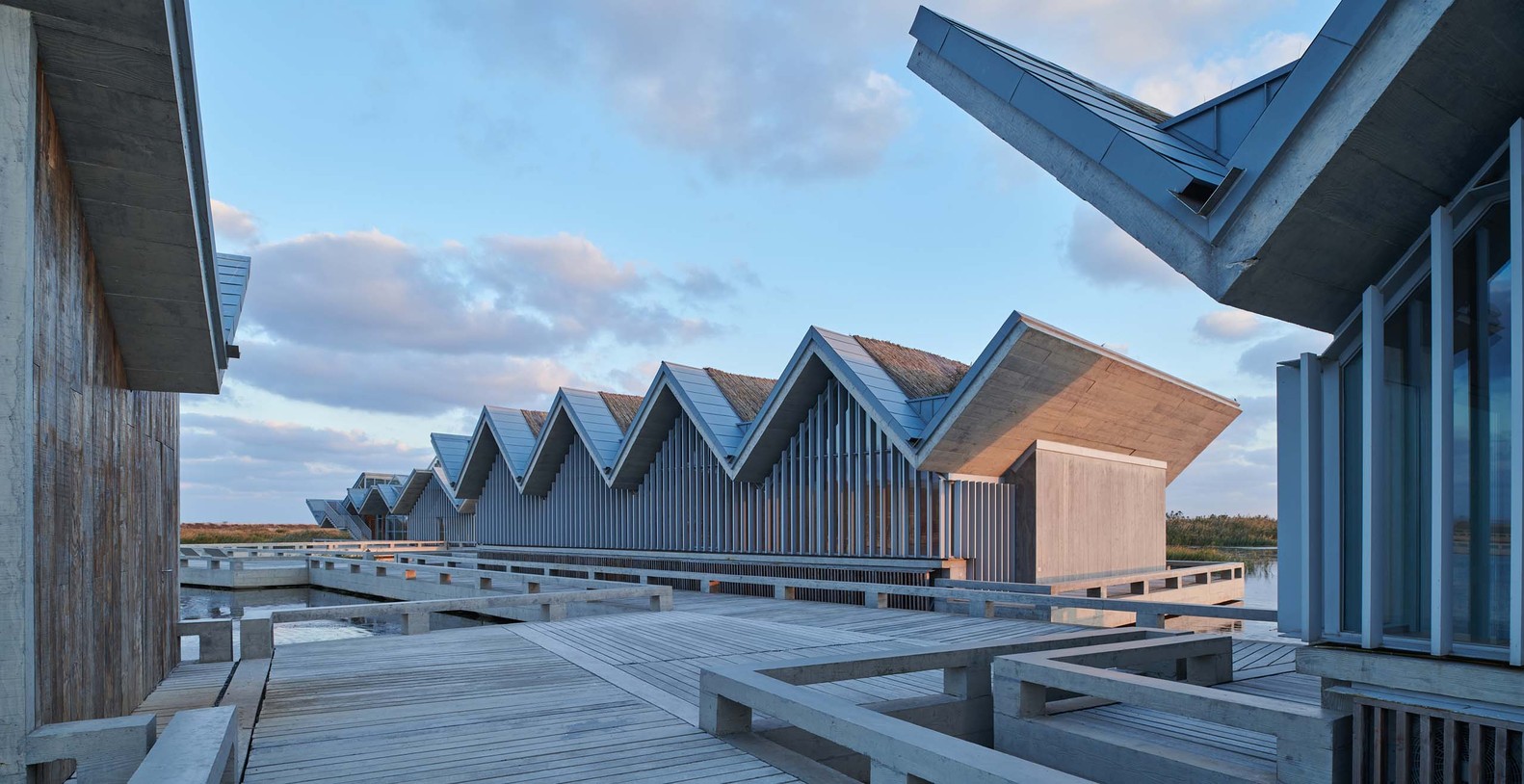
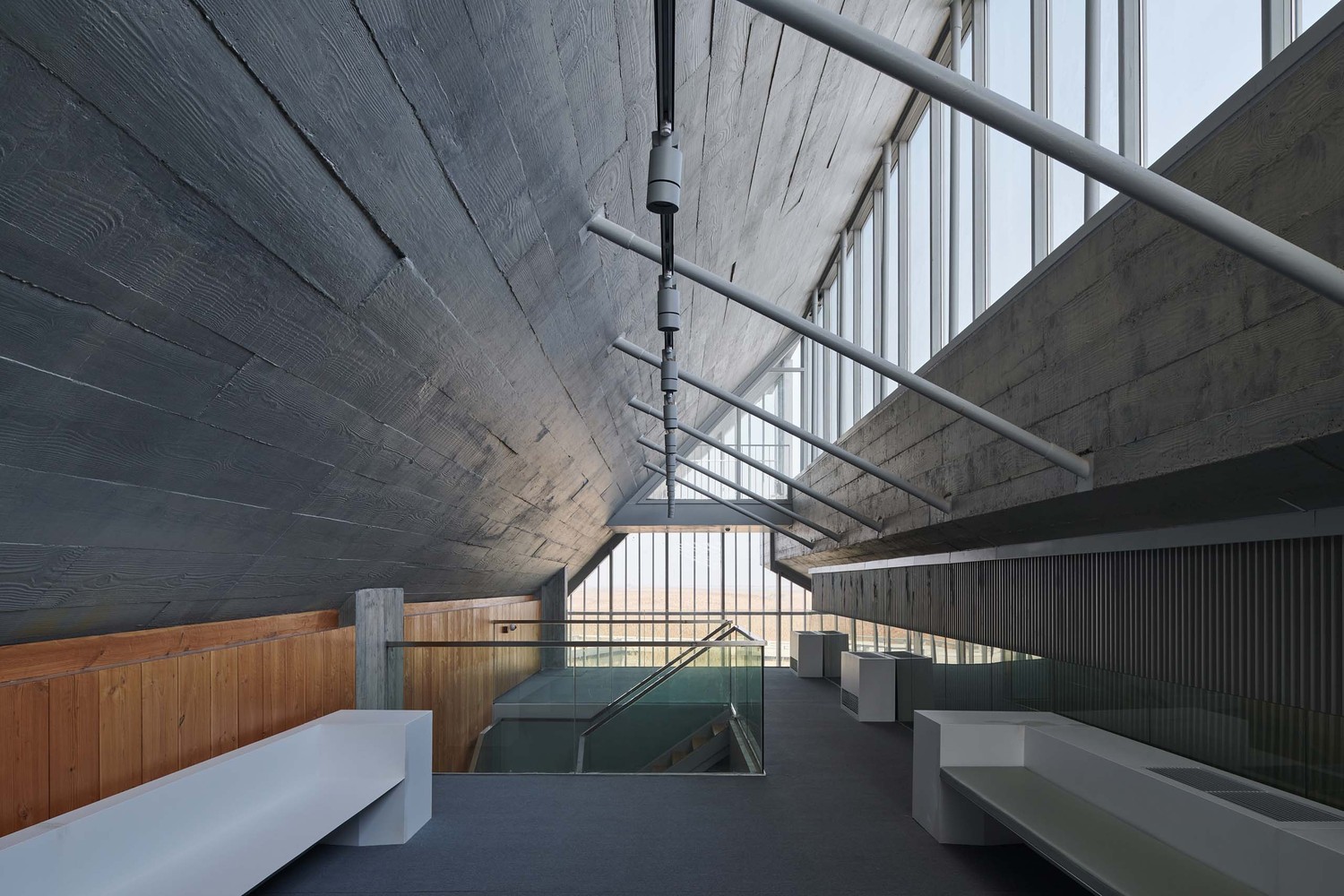
The building's inspiration came from small secluded huts scattered between the mountains and the water. These huts were described in the fourteenth century by the ancient Chinese landscape painter Wang Meng. In order to minimize the impact on the local ecosystem each time the site is used, the architectural volume design is divided and dispersed, forming clusters of settlements on pile platforms, which float above the water and are hidden among the reeds. Through prototype conversion and scale control, indoor and outdoor spaces can respond to specific environments such as skies, wetlands, reeds, and flying birds.








Authentication required
You must log in to post a comment.
Log in