 Google
 Facebook
Six Architects from Different Countries Collaborate to Build Kagerou Village Pav









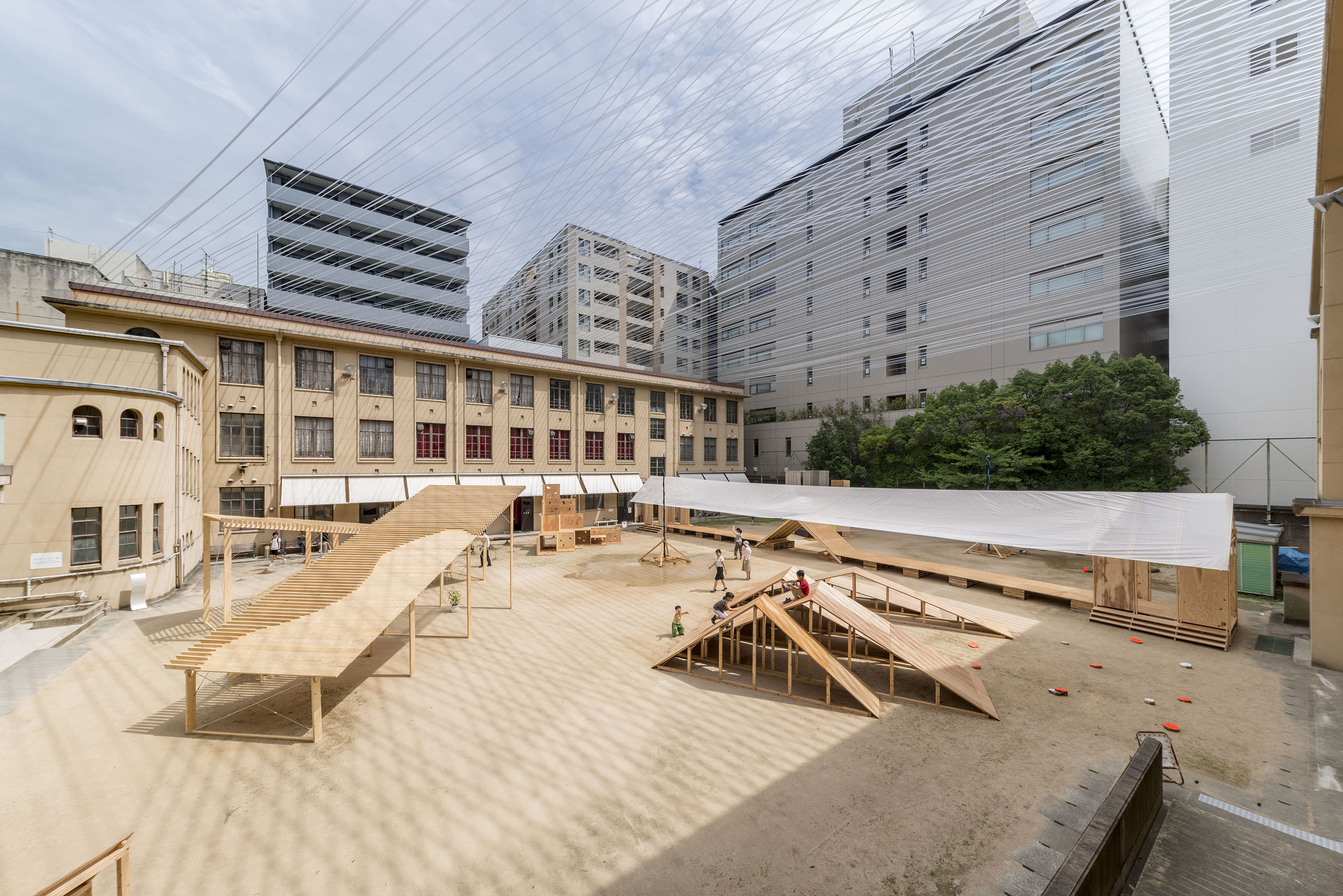

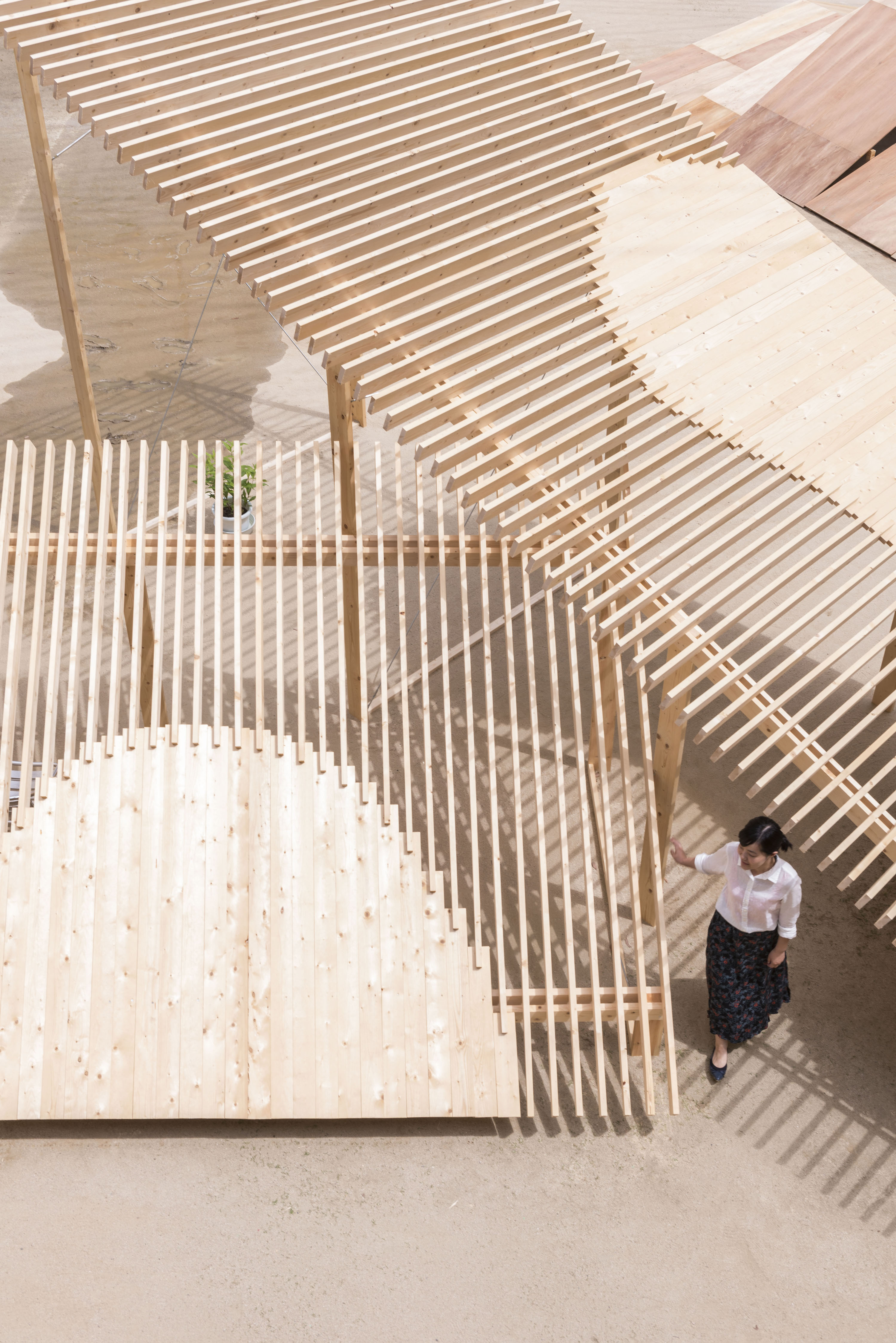
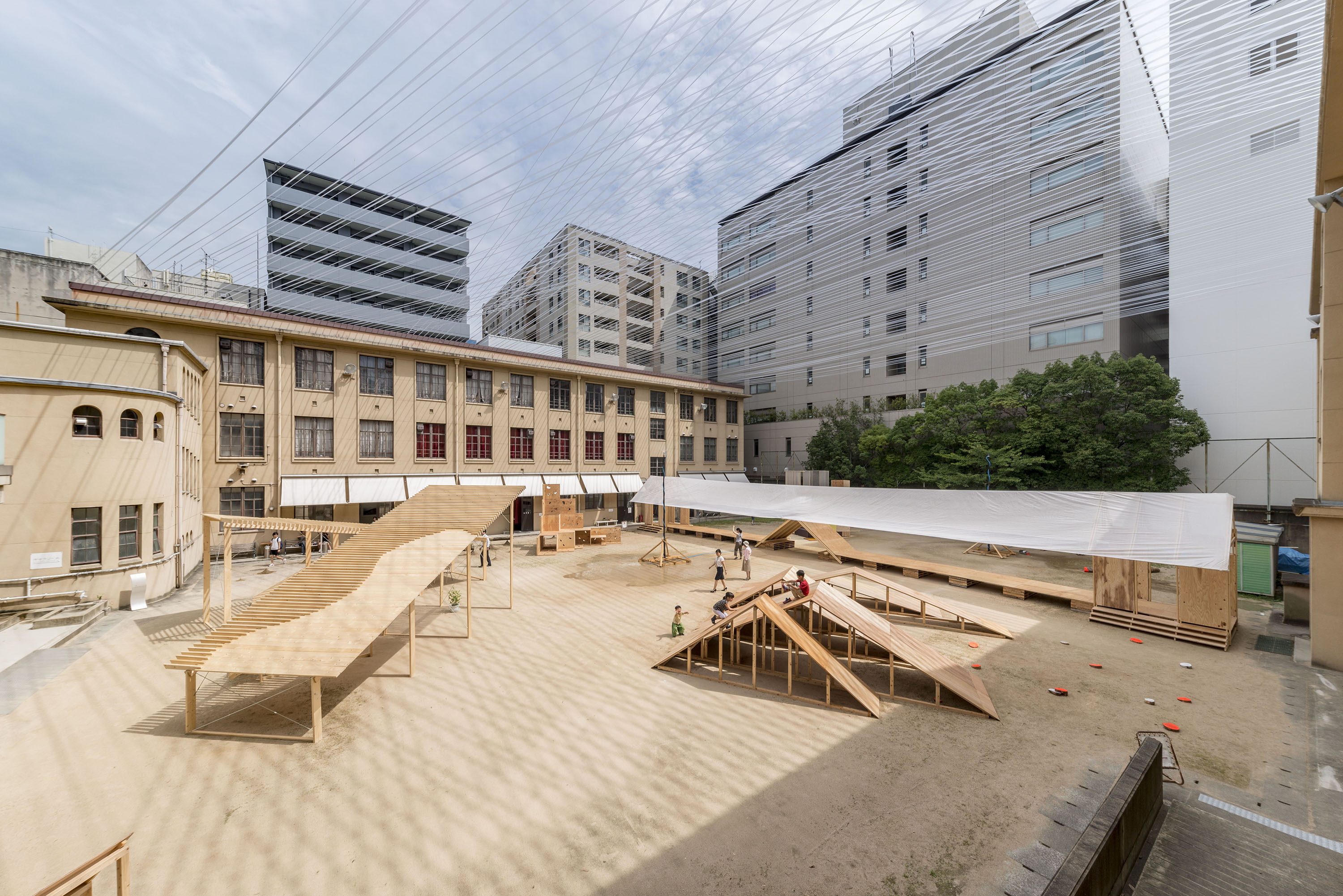
In the past, this place a playground for a school in Kyoto, but now its function has been transformed into an art center built by a group of architects from different country of the world. In the courtyard of this former playground, six temporary wooden pavilions stand as 'free and dangerous' public spaces.
(6 wooden pavilions fill the courtyard of a former playground of a school)
This project was known as Kagerou Village. As a public space, the six-volume pavilion is free to use for anyone with unrestricted activities. Uniquely, in this pavilion, visitors can do things that are prohibited or even considered taboo for most people.
It is a collaborative project of several architects from around the world, including Tato Architects, Dot Architects, Hiroshi Kato, Martinez West Lafore Architects, Ludwig Heimbach, and Sven Pfeiffer. They work together from the process of determining ideas and designing designs, to construction.
(Dangerous Playground for kids)
Like any collaboration project in general, each architect has their role in its design. In Kagerou Village, each architect built one complimentary pavilion. To announce to the audience, they held a 'no-preparation' exhibition that told how to build six pavilions with the concept of 'free and dangerous.'
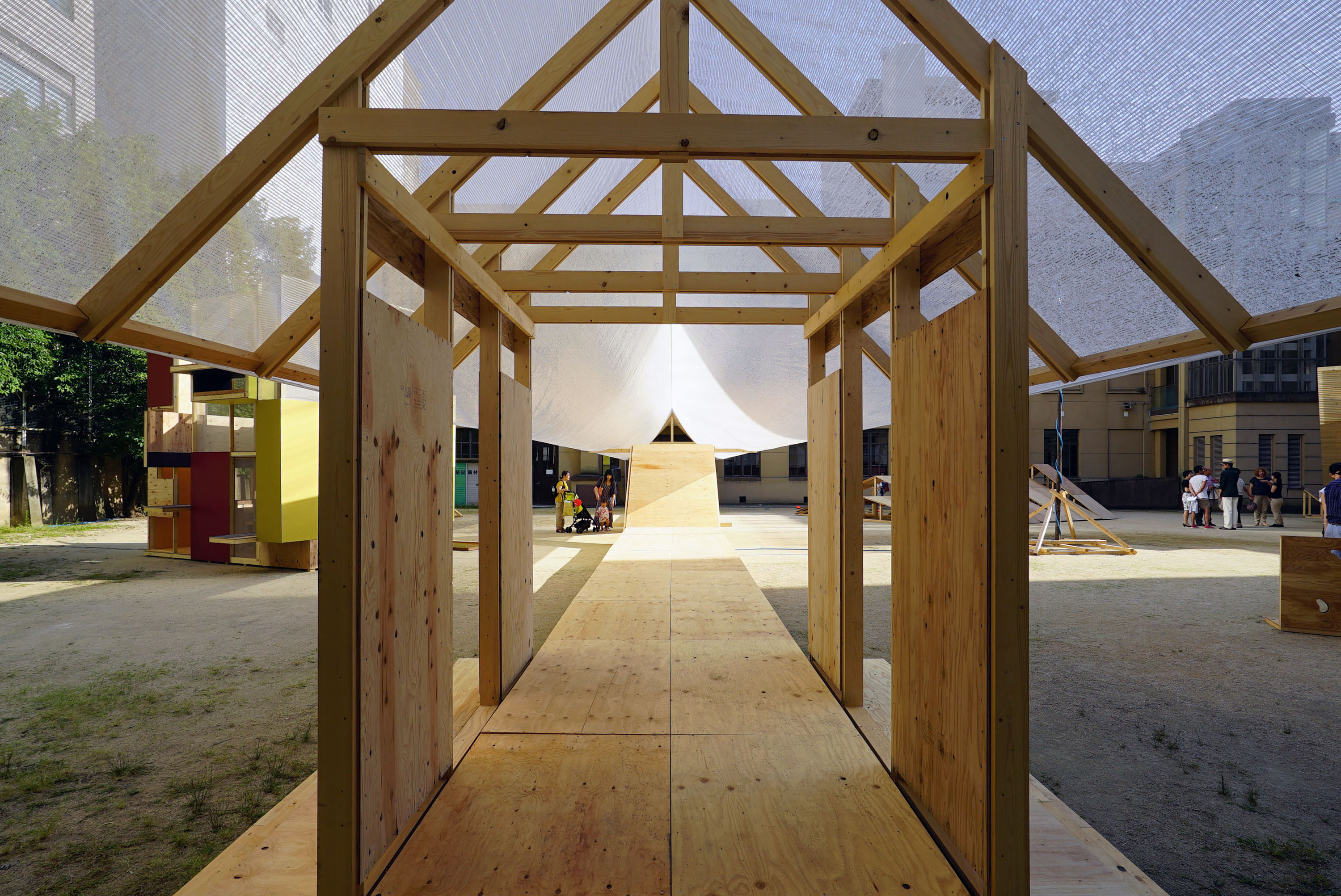
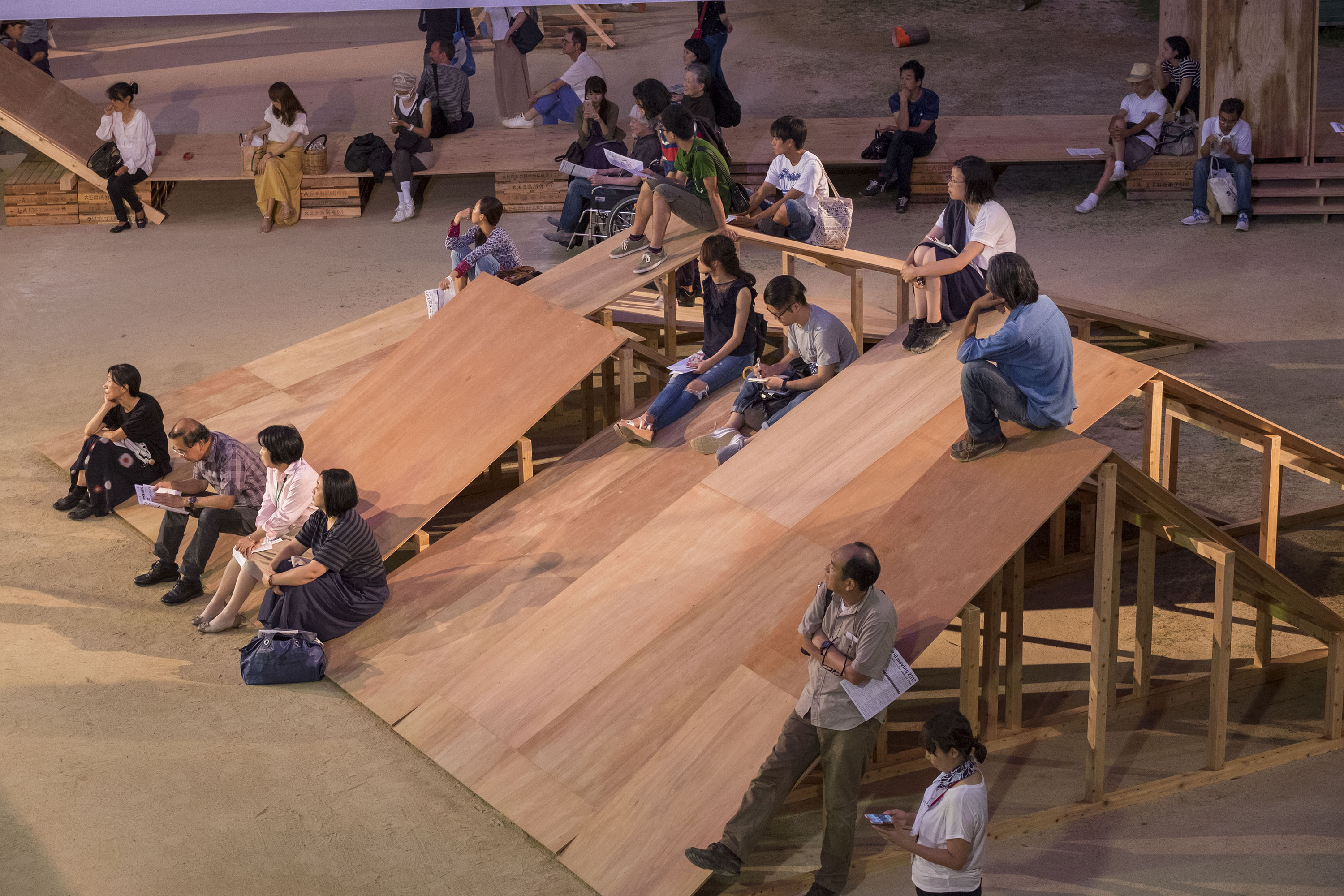
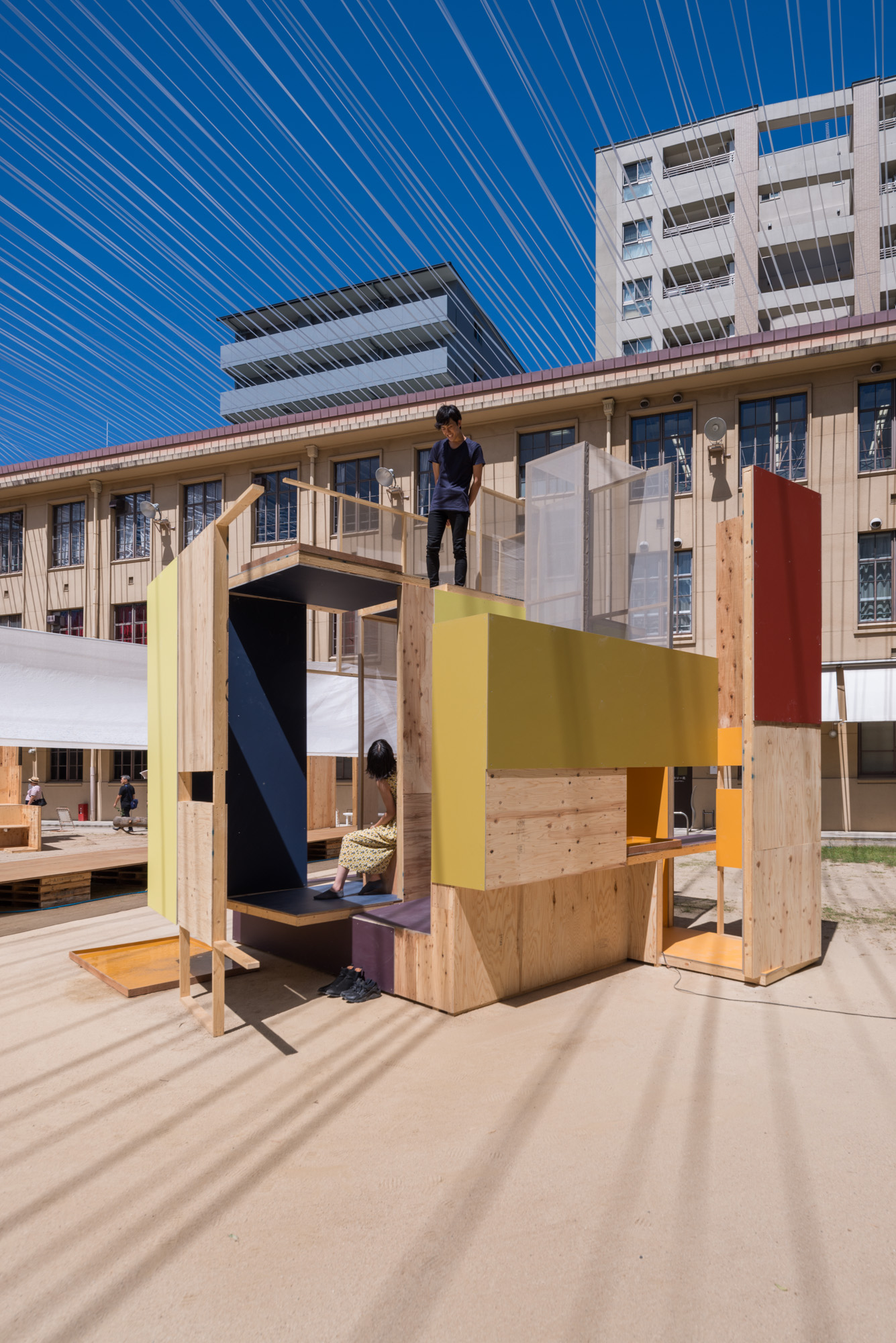
It begins with the work of Tato Architects who spreads a transparent piece of cloth on a wooden deck. This is a safe area for children to play. Dot Architects built a series of sloping wooden planks in another area that accommodated seats and shelters from direct sunlight under its triangular structure. Looking at the courtyard, the German architect Ludwig Heimbach built a wooden pavilion with a small space for kissing.
(Tato Architects created a pavilion to encourage visitors to play on the exhibition grounds)
(Dot Architects designed a pavilion with sloping seating)
(The pavilion for kissing was designed by Ludwig Heimbach)
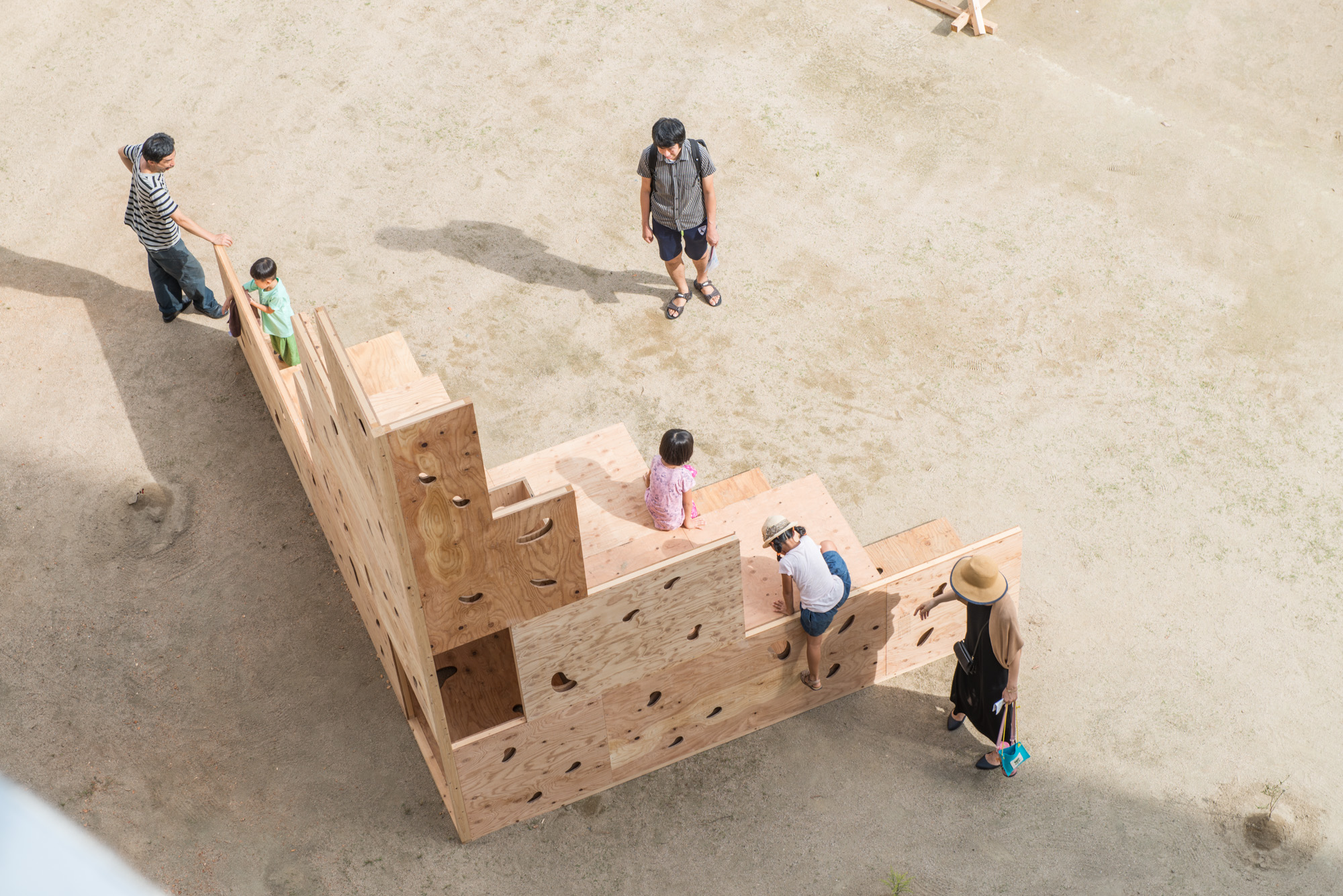
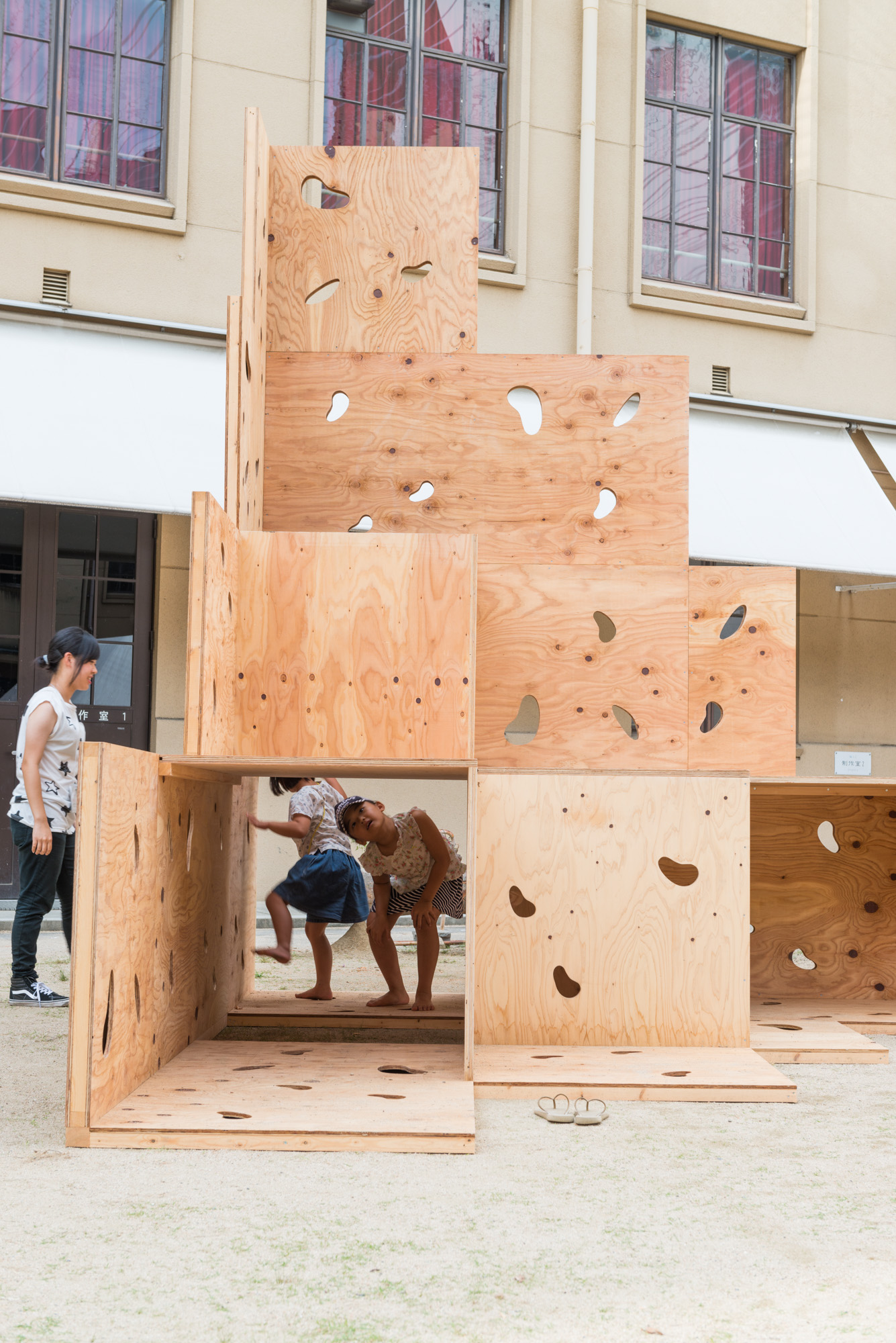
What attracts children the most is 'Dangerous Playground." The pavilion was designed by Sven Pveiffer using pieces of wooden boards sculpted over the lawn land forming an abstract pattern for a 'dangerous playground' for children. At the top of the yard, Hiroshi Kato perfected the entire exhibition area with pieces of vinyl that formed a shadow pattern on the ground.
(Sven Pveiffer designed a Dangerous Playground for children)
(Vinyl pieces by Hiroshi Kato adorn the sky of the exhibition courtyard)
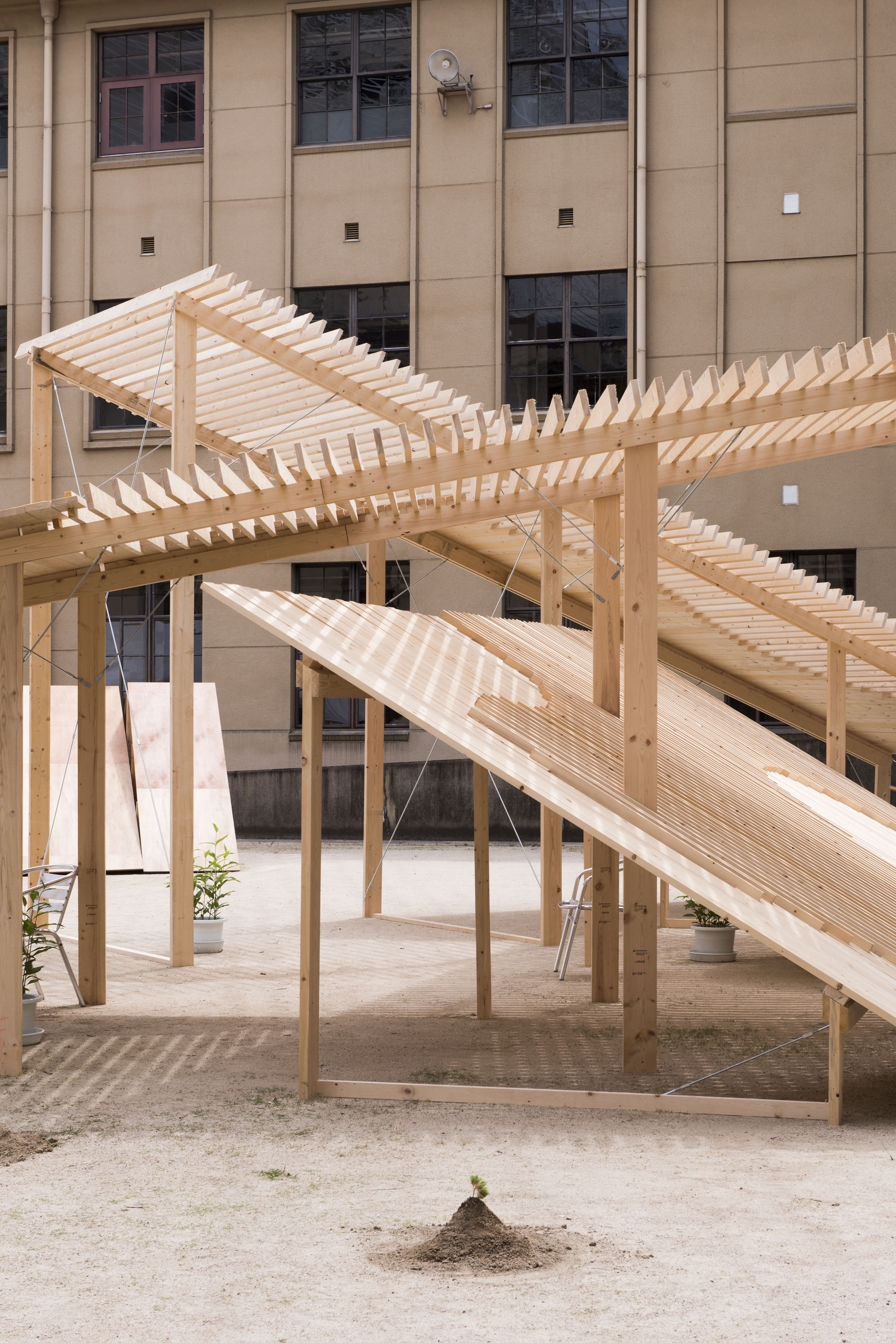
It is incomplete if an exhibition in a public space does not have a welcome door that welcomes visitors. To complement the exhibition, France-based architectural firm West Martinez Lafore Architects designed a 'welcome' wooden structure with interlocking grilles as if to guide visitors into Kagerou Village.
(Martinez West Lafore Architectes designed a 'welcome' pavilion with a wooden grille)
"The intention of Studio Sven Pveiffer, Tato Architects, and Dot Architects was to provide the 'potential playground danger,’ that Japanese public space typically excludes," said Yo Shimada, founder of Tato Architect.
(Top view of the 'welcome' pavilion)











Authentication required
You must log in to post a comment.
Log in