 Google
 Facebook









One of the materials often used in a design is glass because of is translucent, strong, and easy to combine with other materials. However, as a glass building material, it also has the disadvantage of being unable to absorb the sun's thermal heat. In addition, the glass fabrication process also pollutes the air, so currently, many environmentally friendly glass solutions are emerging.
Applying glass material in a building can be appropriate if good planning and design are implemented. Here are five examples of using glass materials in buildings with various problems and potentials.
Y/K Building, by Paritzki & Liani Architects
Y/K Building , Photo by Amit Geron
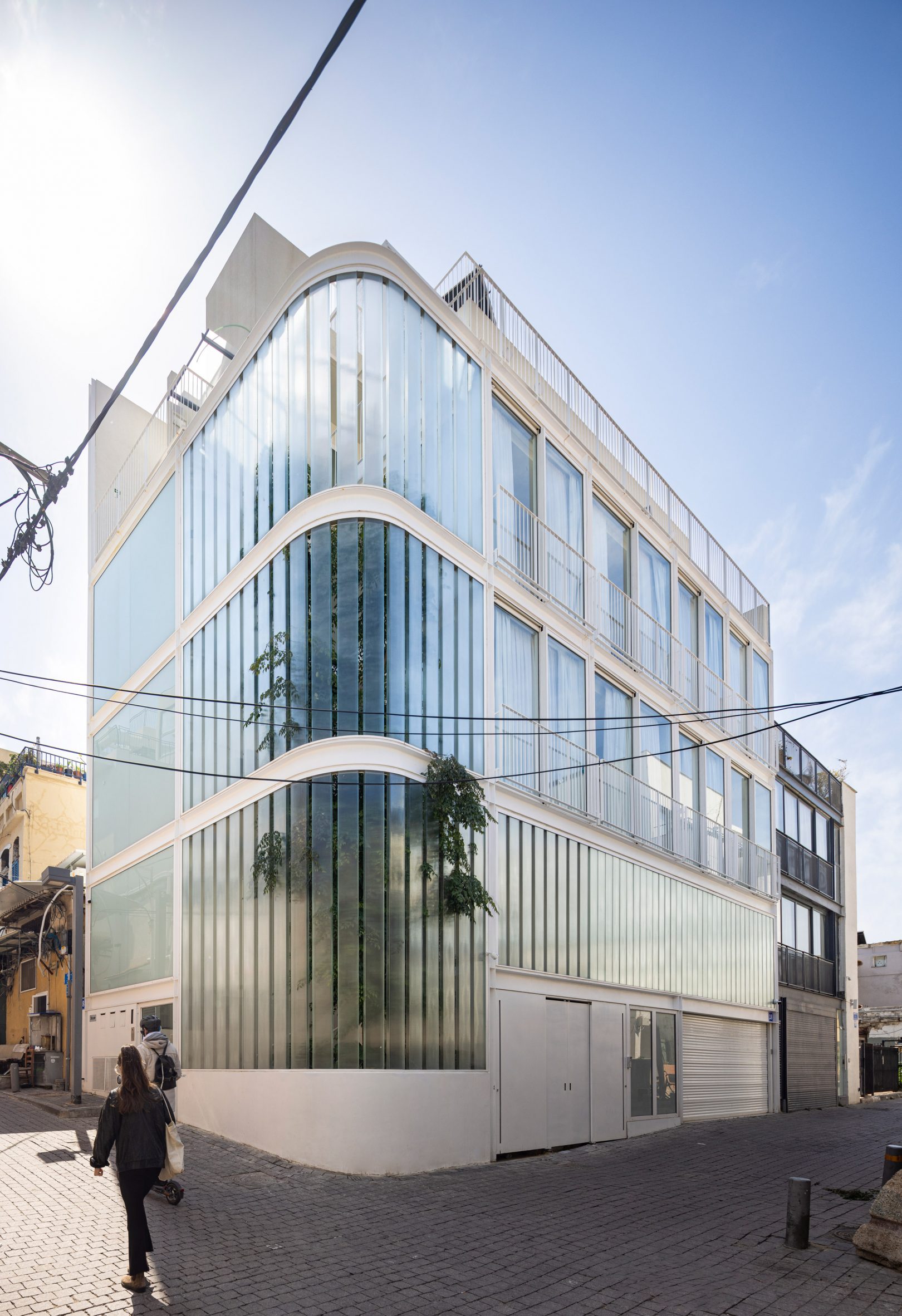
Located on a plot of land in the corner of the Kerem HaTeimanim neighborhood, the Y/K Building has four floors containing two multi-storey apartments. This building offers views of the surrounding environment with its glass façade. In addition, Paritzki & Liani Architects deliberately placed a tree in the corner of this four-story building. Another purpose of this tree planting is to serve as a filter between busy streets and internal spaces and terraces.
Paritzki & Liani Architects added this building filter by designing a secondary skin façade made of translucent glass boards. The goal is to bring the scenery to the street so that apartment residents can enjoy it freely. On the other hand, two predominantly glass-dominated facades, with open steel frame I-beams, create a grid-like feel. In addition, these translucent boards arranged at a distance of 3 cm can provide curved corners to the building while creating additional ventilation.
Paritzki and Liani hope that the Y/K Building can also capture the chaotic style of the surrounding environment, which is described as "new construction and pieces of empty space". Building Y/K is a place for introspection of urban life thanks to the tranquility and freedom offered.
Looking Glass Lodge, by Michael Kendrick Architects'
Looking Glass Lodge, Photo by Tom Bird
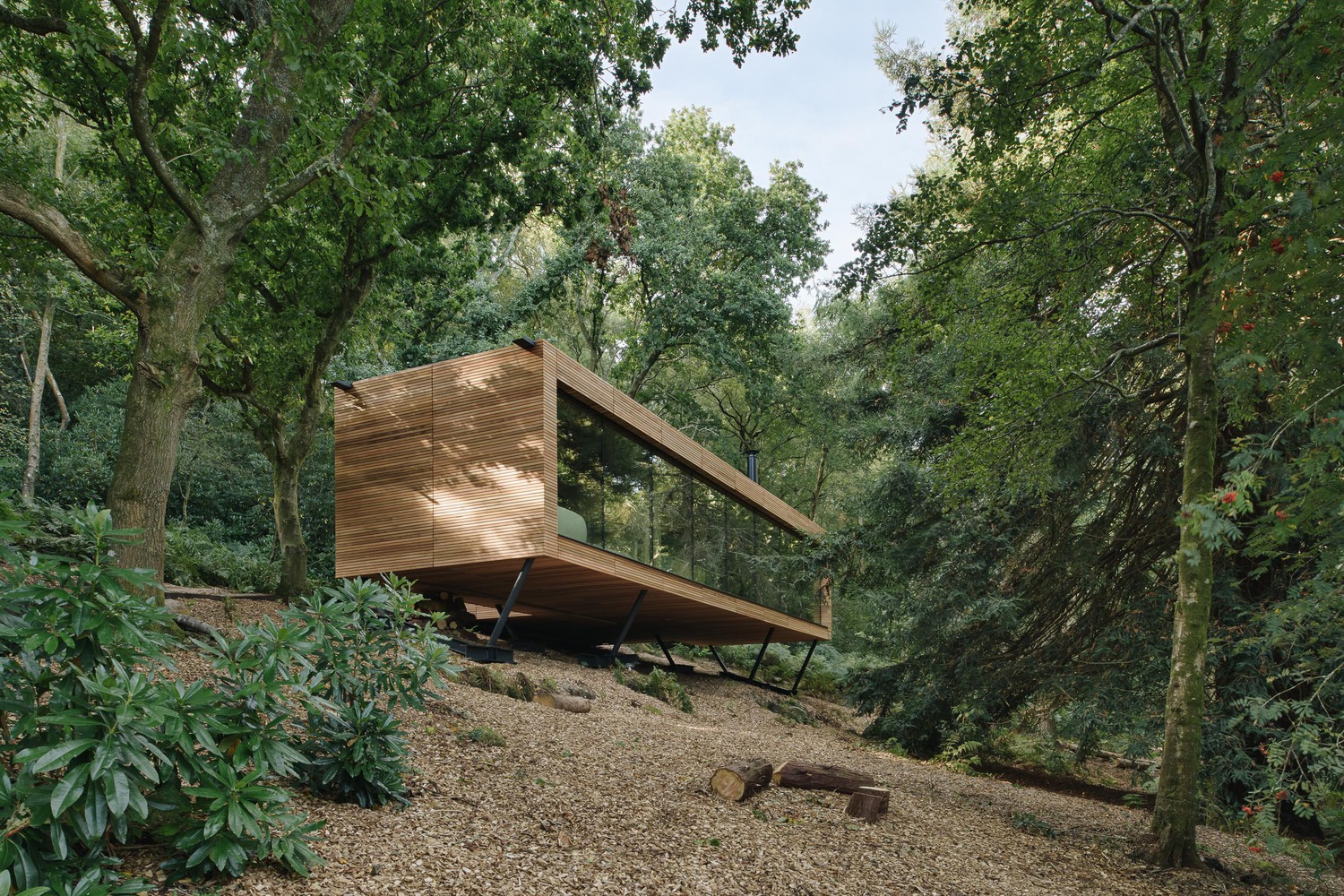
Michael Kendrick Architects' Looking Glass Lodge is a retreat and holiday building in the High Weald Area of Outstanding Natural Beauty Hastings, England. Michael Kendrick Architects uses a design approach to minimize direct environmental impact with natural materials.
The smooth and simple design using an inclined contoured site, makes this cottage appear raised among the surrounding trees. In addition, its unique shape, with a glass front and back façade as a window, can create a stunning spatial experience. Kendrick designed both facades using electrochromic glass to provide privacy and limit excessive light and air from entering the cottage.
In addition to the glass of this cottage, it uses the main material of western red cedar type wood on the outside and inside of the cottage combined with a hybrid steel frame structure with a pile foundation to be the main structure of this cottage to avoid damage to the roots of existing trees, ensure that no trees need to be cut down, and maintain free access to wildlife.
Glass House, by Ângela Roldão Arquitetura
Glass House, Photo by Jomar Bragança
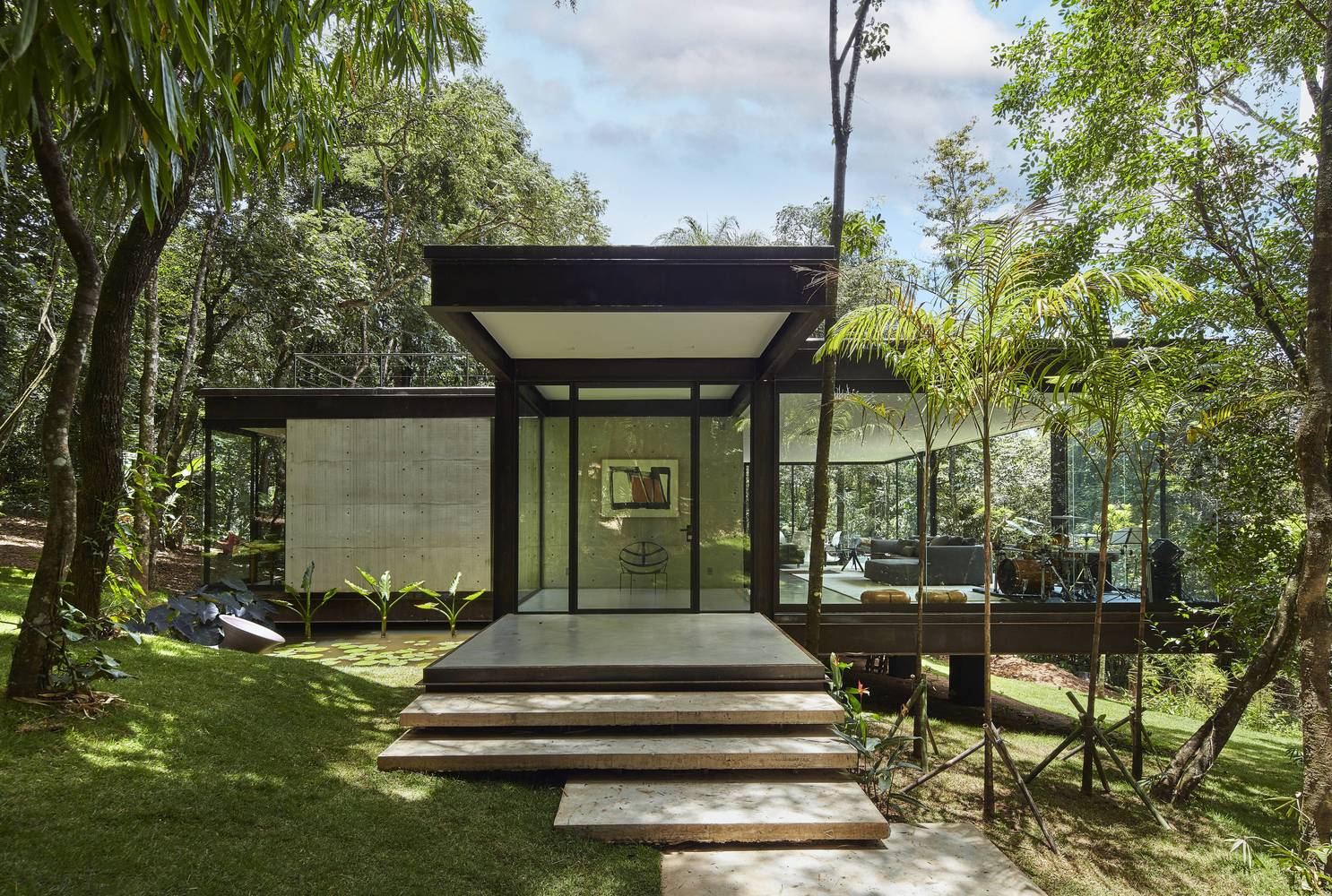
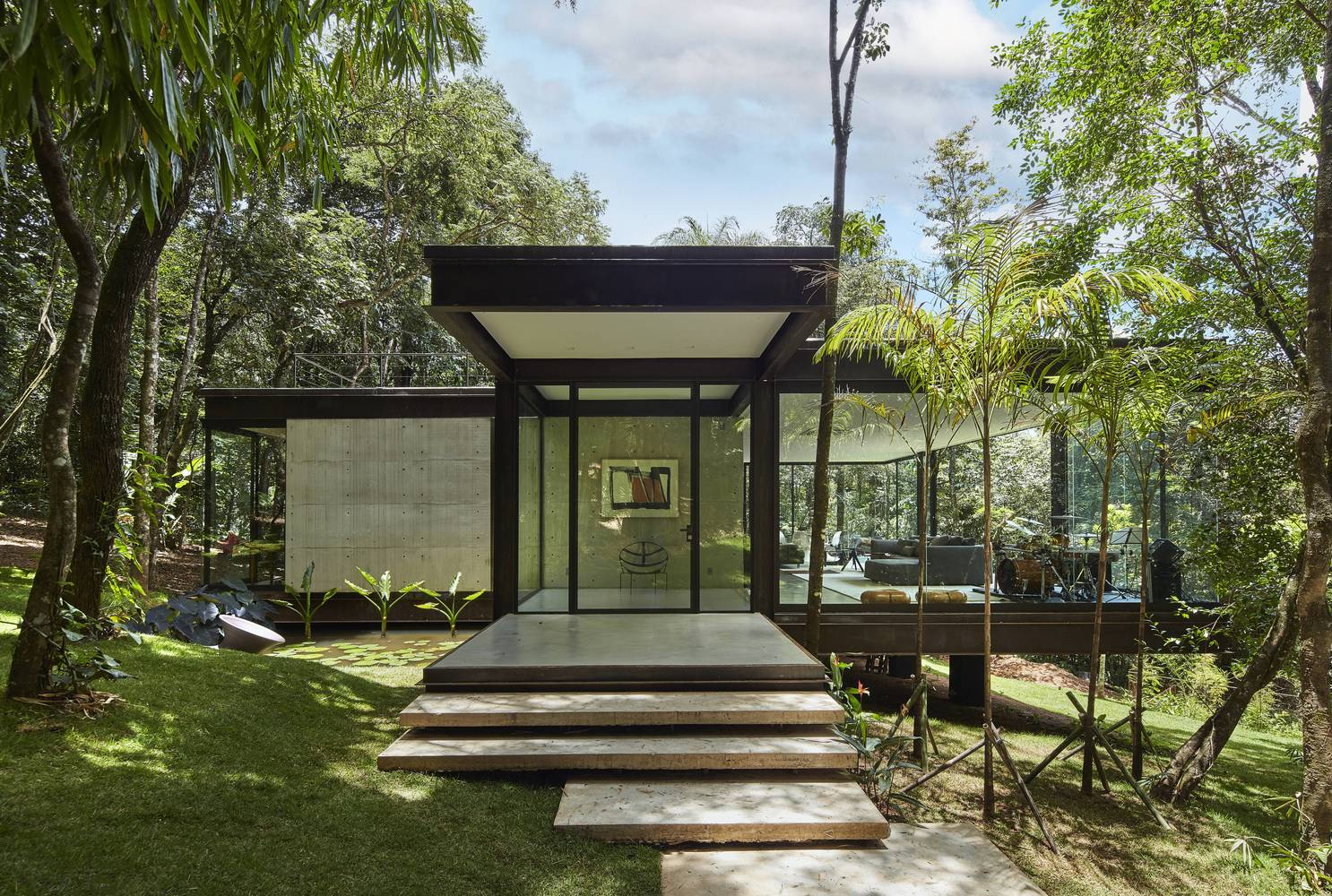
A natural potential for Glass House as it is located on the territory of Rola Moça Park, which is a nature reserve area in the City full of rivers, waterfalls, and trails. - Angela Roldão Arquitetura designed a simple residence with a fast, efficient construction process, requiring little team. The Glass House is arranged in two modules that are 6x12m each (maximum size of the steel bar), 3x12m modules, plus a balcony, so as not to waste material.
In addition to using steel structures, using glass materials is one of the solutions for simple construction. For example, Angela Roldão Arquitetura designed metallic structured aluminum window frames, glass, bright concrete covers, techno cement floors, and porcelain tiles in the bathroom that define the space and capture the surrounding landscape. Because of this simplicity, Roldão Arquitetura called designing a Glass House like designing a treehouse.
Tree House, by Ian McChesney
Tree House, Photo by Adam Scott
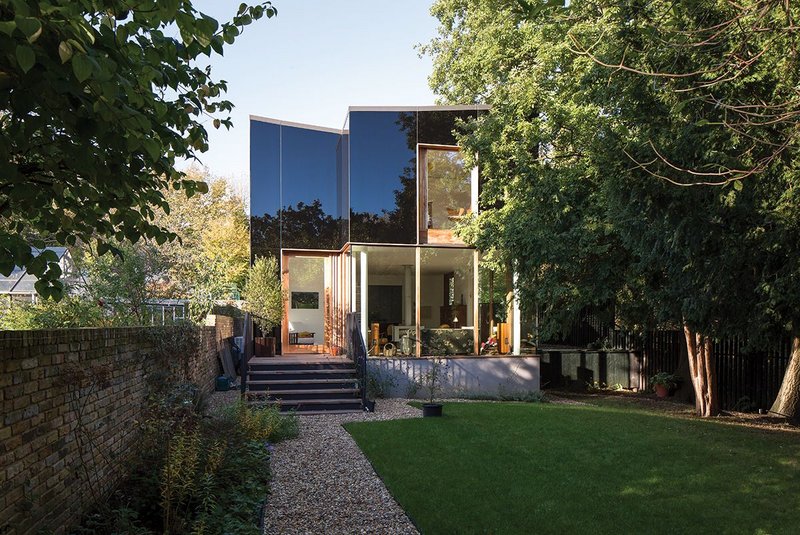
Ian McChesney designed a house called Treehouse on a piece of land in a conservation area in Sydenham, South East London. However, in his design, Ian McChesney faced various challenges, including criticism of the locals for one reason or another. Nevertheless, with his methods and approaches, he finally met the midpoint of designing this Tree House.
Ian McChesney designed this residence with a new and fresh concept of "simple and sharp shape" consisting of two volumes united with a butterfly roof. These two wood-framed masses are coated with polished black glass to maximize the relationship with the surrounding environment. The insulation layer between the prefabricated wooden frame and the glass surface gives warmth to the house. The windows with wooden frames, neatly fixed on the glass panels downstairs, overlook the garden.
Three by Two house, by Panovscott
Three by Two house, Photo by Brett Boardman
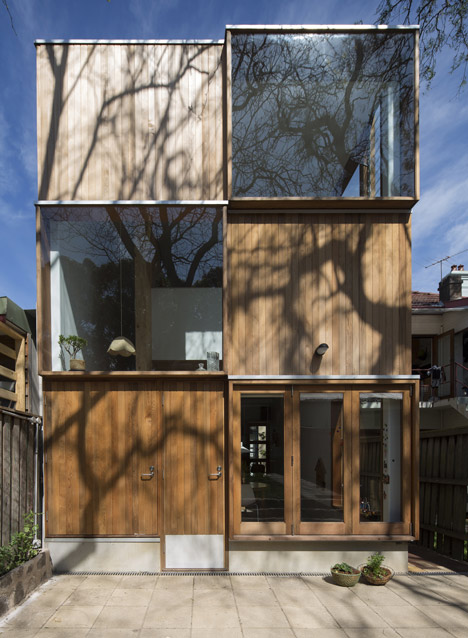
The Three by Two house was designed by Panovscott, based on the request of residents who want light, air, and a place for families to communicate, summarized in a unique and comfortable home.
Panovscott designed this house like two masses of cubes arranged vertically three levels high. Most of the materials use wood combined with glass. Viewed from the front of the house, wood and glass materials alternately cover the back, offering a balance of light, shadow, scenery, and privacy. The glass section on the rear façade acts like an eye patch, framing the view of the treetops while protecting the family from being overlooked. On the ground floor, glass doors and wooden panels are folded back to open the house to the garden.









Authentication required
You must log in to post a comment.
Log in